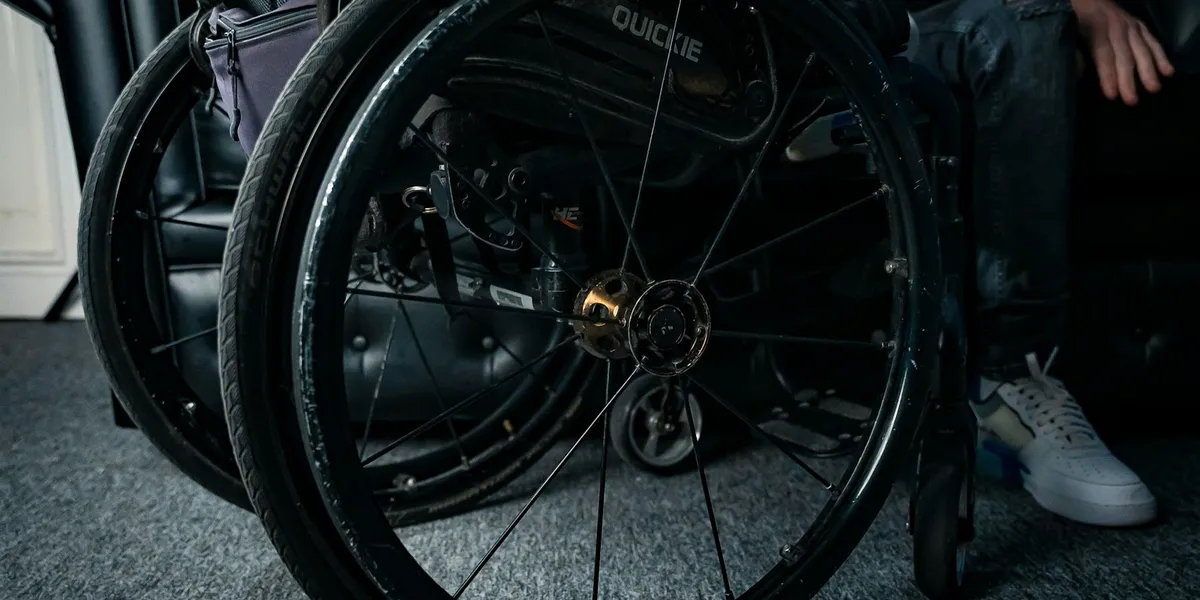
Most people shopping for a manual wheelchair treat it as a single category. There are actually three distinct classes, each built around different assumptions about who will be propelling the chair, how often, and for how long. Getting the class right matters more than any other decision you will make.
The three classes, in order of cost and complexity, are: transport chairs, standard chairs, and active chairs.
Class 1: Transport chairs
A transport chair is designed to be pushed by someone else. Always. It has four small wheels - there are no large rear wheels to grip and self-propel. This is the defining feature, and it shapes everything else about the chair.
Transport chairs typically include armrests, a high back, and push handles for the caregiver. Because the user is never self-propelling, the frame can be lighter and more compact than a standard chair.
Who this is for: Anyone whose mobility needs are primarily about being moved from place to place by a caregiver, and who does not need to self-propel independently, even occasionally.
Price range: A solid transport chair starts around $150. Higher-end models with lighter frames or better cushioning run $300 to $400.
The key limitation: You cannot move yourself in this chair. If your caregiver steps away and you need to reach something across the room, you are waiting for them to come back. That constraint is not a flaw in the chair - it is what the chair is - but it needs to be understood before buying.
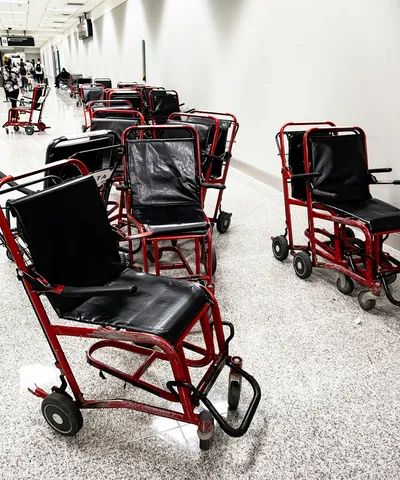
Example: transport chair
Class 2: Standard chairs
Standard chairs are what most people picture when they think “wheelchair.” They are sometimes called hospital chairs because this is the equipment hospitals and rehab facilities most commonly stock.
The defining feature is the large rear wheels. These make limited self-propulsion possible - moving from one room to another, repositioning at a table, getting to the bathroom independently. A standard chair is not designed for someone who will be self-propelling across town, but it is designed for someone who needs to move themselves occasionally while still being pushed by a caregiver much of the time.
Standard chairs have high backs with push handles, and usually include armrests - sometimes removable, which makes reaching the wheels easier.
Center of gravity and stability: The most important engineering decision in a standard chair is stability. The center of gravity is positioned toward the rear and is generally not adjustable. This makes the chair very hard to tip backward, which is the point. Doing a wheelie in a standard chair ranges from difficult to impossible, and that is by design. These chairs prioritize safety for users who may have limited upper body strength or balance control.
Who this is for: Someone who relies primarily on a caregiver for mobility but needs some independent movement at home. Also the most common type available through charities and medical loan programs at low or no cost.
Price range: $150 to $500 depending on features, weight, and frame material. Lightweight variants cost more. Bariatric versions (see below) also run higher.

Example: standard chair
Class 3: Active chairs
Active chairs - sometimes called custom chairs - are what most full-time self-propelling users end up in. If someone who uses a wheelchair every day is moving through an airport, navigating a campus, or commuting to work, they are almost certainly in an active chair.
Active chairs differ from standard chairs in several important ways:
- Low back: The backrest is usually as low as the user can functionally manage. A lower back allows for a fuller, more efficient push stroke and reduces energy waste.
- No push handles: Many active chairs omit push handles entirely, or have them removable. The chair is not designed to be pushed by someone else.
- No armrests, or minimal ones: Armrests restrict the push stroke. Many active chair users go without.
- Adjustable center of gravity: The rear axle position can be moved forward, which makes the chair more maneuverable and responsive. It also increases the risk of tipping backward, which is an accepted trade-off for experienced users.
- Wheelies are possible: And sometimes necessary - for curbs, rough terrain, doorways. An active chair is balanced to allow this.
Custom manufacturing: Most active chairs in the U.S. are not bought off a shelf. A medical professional takes the user’s body measurements and those specifications go to a manufacturer who builds the chair to order. That process typically takes around four months from order to delivery. Some newer models have cut factory build times to around five days, bringing total delivery closer to seven weeks - but this is still a custom-built medical device, not a same-day purchase.
Price range: Most custom active chairs in the U.S. cost around $4,000 before insurance. With Medicare or Medicaid coverage, the out-of-pocket cost is often 10 to 20% of the approved amount. Ultra-lightweight models can run $9,000 to $10,000. A small number of models are available for under $2,000, but with less customization.
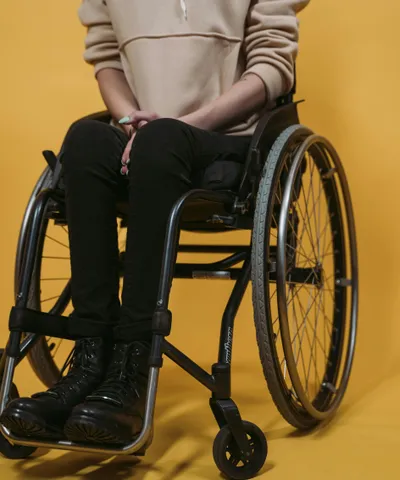
Example: active chair
Sizing: pediatric to bariatric
All three chair classes come in multiple sizes. Pediatric chairs are built for children. Standard adult sizing fits most adults. Bariatric chairs are designed for users above approximately 220 lbs - accounting for body weight, clothing, and anything the user typically carries (groceries, a bag, a pet on the lap). Some bariatric transport and standard chairs are rated for users up to 600 lbs.
Bariatric models are often identified by a model number ending in “HD” (heavy duty).
When calculating the weight capacity you need, include everything you will carry in the chair, not just your body weight.
The question before you buy
Before looking at specific models, answer these four questions. They determine your class and narrow your options significantly.
1. Who will primarily be propelling the chair? If always a caregiver: transport chair. If mostly a caregiver but sometimes yourself: standard chair. If mostly yourself: active chair.
2. How tall are you, and what weight capacity do you need? Include body weight plus anything you typically carry.
3. Where will you use it? Indoor and standard sidewalks are manageable in any class. Dirt paths, gravel, curbs, or uneven terrain favor a standard or active chair with appropriate tires.
4. What is your upper body strength like? Active chairs can demand real physical effort, particularly aggressive models designed for outdoor use. Some active chairs, however, are light and responsive enough to be used by people with limited upper body strength - including some quadriplegics. This is worth discussing with a physical or occupational therapist.
A note on insurance
(For U.S. readers) Medicare classifies wheelchairs as Durable Medical Equipment. A doctor’s prescription and documented medical necessity are required. Transport and standard chairs are generally easier to obtain coverage for. Active chairs - particularly custom-built ones - require more detailed documentation and a seating evaluation by a qualified therapist. A DME supplier who specializes in wheelchairs can help navigate this process; they work with your doctor and the insurer directly.
Outside the U.S., coverage and funding pathways vary significantly. A local assistive technology provider or national disability organization is usually the best starting point.